
The term “wellbeing” is used a lot. We all want to have a sense of wellbeing – but what does it actually mean?
Many of us associate wellbeing with health and the idea of being ‘well’. However, achieving true wellbeing takes more than simply being physically healthy.
Wellbeing is a subjective concept and is related to your own individual perception of yourself, the world around you, and your place within it. This makes it difficult to describe and challenging to measure because true wellbeing is more than a list of specific achievements or material possessions.
For example, a person might be in perfect health, own a beautiful home, have a great job, and live with a happy loving family, but still lack a sense of overall (or ‘holistic’) wellbeing.
Alternately, a person might be between jobs and sleeping on a friend’s couch, but still feel a strong connection to the world, and a sense of positivity and contentment.
As such, there is no agreed definition of wellbeing, but among experts who study health, wellness, and people, there is general agreement that wellbeing is:
In other words, your sense of wellbeing is related to a combination of elements (or parts), commonly referred to as the elements of wellbeing.
The Wellbeing Wheel is a helpful way for us to think about and understand our overall wellbeing. It depicts the elements (or parts) of wellbeing as “spokes” on a wheel, allowing us to think about the parts of life where we are thriving, as well as parts that may need more attention.
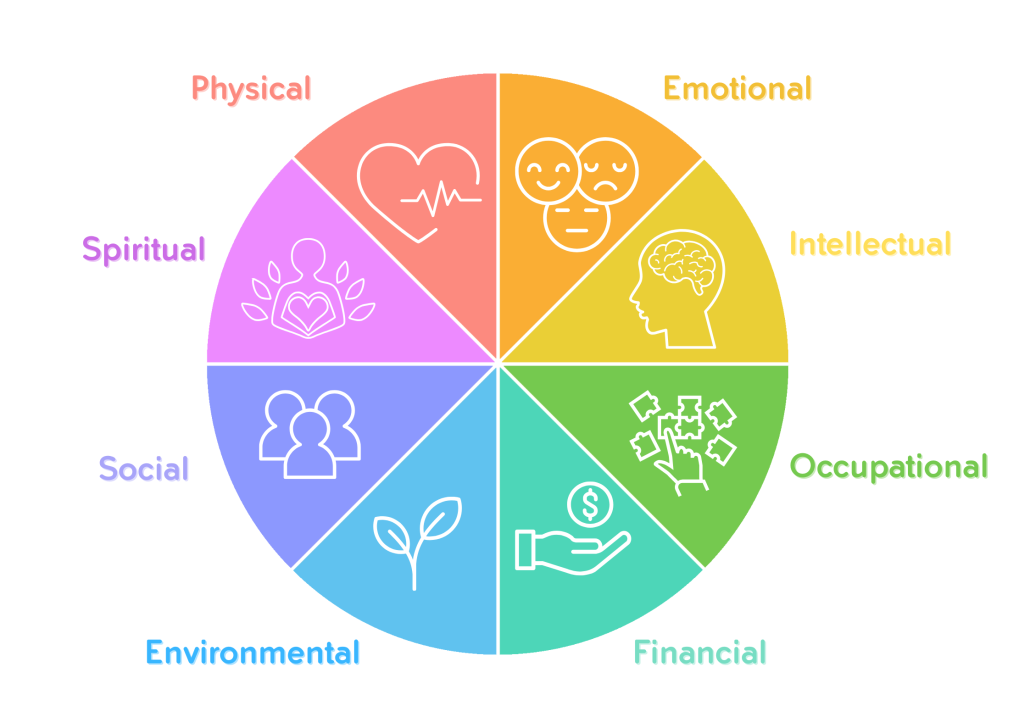
The Wellbeing Wheel presents 8 different elements, all of which may impact our sense of wellbeing.
These elements are:
The way we understand these elements, how important they are to our personal sense of wellbeing, and what we do to in our day-to-day lives to take care of the various parts of ourselves is different for everyone. The amount/degree of attention we need to pay to each element can also vary depending our personality, our age or stage of life, external events, and on our own personal circumstances.
You can explore your own wellbeing – identifying your skills, strengths and areas for growth – by creating your own Personal Wellbeing Wheel.
The Headspace Wellness Wheel Activity is another way to delve deeper into what wellbeing means to you.
Read more about the elements of wellbeing, along with ways that you can improve or enhance your sense of wellbeing via the links below.